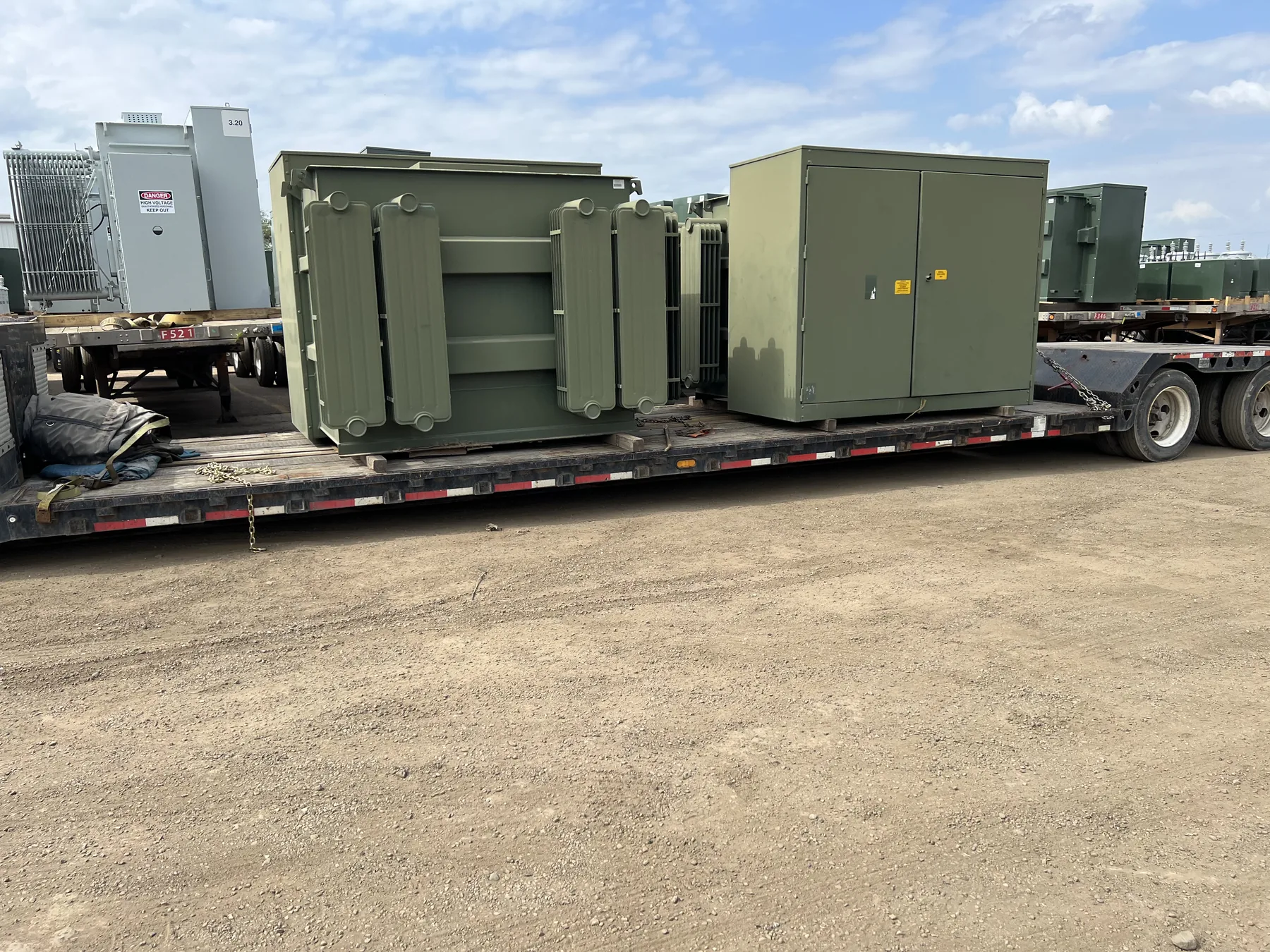
Which transformers can be submitted?
Commercial sellers may submit new-surplus, used, stored, installed, retired, and select non-operational transformers for review. Common submissions include pad-mounted units, dry-type transformers, distribution transformers, power and substation transformers, isolation transformers, step-up and step-down units, autotransformers, and three-phase equipment. We can also review mixed groups when each asset is identified well enough to understand what is being offered.
Purchase eligibility is never based on the category name alone. A buyer must consider specifications, ownership, condition, completeness, fluid status, market fit, location, and the practical cost of handling the unit. Some equipment may be better suited to reuse, rebuilding, parts recovery, or another compliant channel. The purpose of the review is to identify a responsible commercial path, not to force every submission into the same outcome.
Build a complete transformer information packet
Begin with one clear nameplate photo. Then add full views of every side, the cabinet or tank, bushings and terminals, gauges, radiators or fans, core-and-coil assembly if already safely exposed, and visible damage. Include the quantity and the exact pickup location. If the equipment is installed, describe whether it is de-energized and disconnected. Never approach live conductors, open sealed equipment, or remove guards to create photos.
Written records can improve the evaluation. Useful documents may include purchase records, drawings, test reports, maintenance history, oil or PCB-related records when applicable, storage history, and a list of missing parts. If records are unavailable, say so rather than guessing. Unknown fields do not automatically stop a review, but they may affect timing, contingencies, or eligibility.
- Manufacturer, model, serial number, and production date
- kVA or MVA, primary and secondary voltage, phase, and impedance
- Operational status, storage history, visible condition, and documentation
- Site access, loading equipment, deadlines, quantity, and seller authority
How review and offer terms are developed
After receiving the information packet, a buyer reviews technical fit and marketability. The team also considers whether the unit can be removed and transported safely under practical terms. When a submission is incomplete, the next step may be a request for a better photo, a missing rating, a condition clarification, or a site-access detail. This is normal due diligence for high-value industrial equipment.
If there is a fit, the offer should identify the equipment, price or pricing basis, quantity, pickup location, loading and freight responsibilities, timing, payment terms, and any inspection or documentation conditions. A seller should confirm that the proposal matches the actual equipment before accepting. Material differences discovered later can affect the transaction, so accurate disclosures are in both parties’ interest.
Why transformer value is asset-specific
A transformer’s commercial value may be influenced by reuse demand, ratings, manufacturer, age, configuration, materials, condition, test history, completeness, and location. Freight and handling can be significant, especially for large liquid-filled or substation units. A unit with clear records and practical loading access may be easier to evaluate than an unidentified unit requiring specialized removal.
For this reason, online price lists and simple weight calculators are usually poor substitutes for a qualified review. They may ignore whether the transformer matches current demand or whether the actual costs of removal, inspection, transport, storage, and downstream processing change the economics. Our valuation guide explains these factors without promising a price that cannot be supported.
Pickup, inspection, and payment
Pickup can be coordinated only after scope and responsibilities are agreed. The seller and buyer should know who disconnects the equipment, who supplies cranes or forklifts, who loads and secures the unit, who obtains permits, and who controls the work area. Site safety rules and access windows must be communicated before a truck or crew is dispatched.
Payment timing and method should appear in the written agreement. If an offer is conditional on inspection, testing, count, documentation, or condition at receipt, those conditions should also be explicit. A professional transaction replaces vague promises with a shared record of the asset, obligations, and next steps.
Send the details that make a decision possible
Use the offer-request page to organize the information. You can also call or text the published number when a conversation is more practical. A texted photo should still be accompanied by your name, company, location, quantity, and a short description so it can be routed correctly.
Submitting information does not obligate you to sell and does not obligate us to buy. It starts a qualified review. If the equipment falls outside the current buying scope, the response should say so clearly rather than leaving the seller waiting for an undefined outcome.