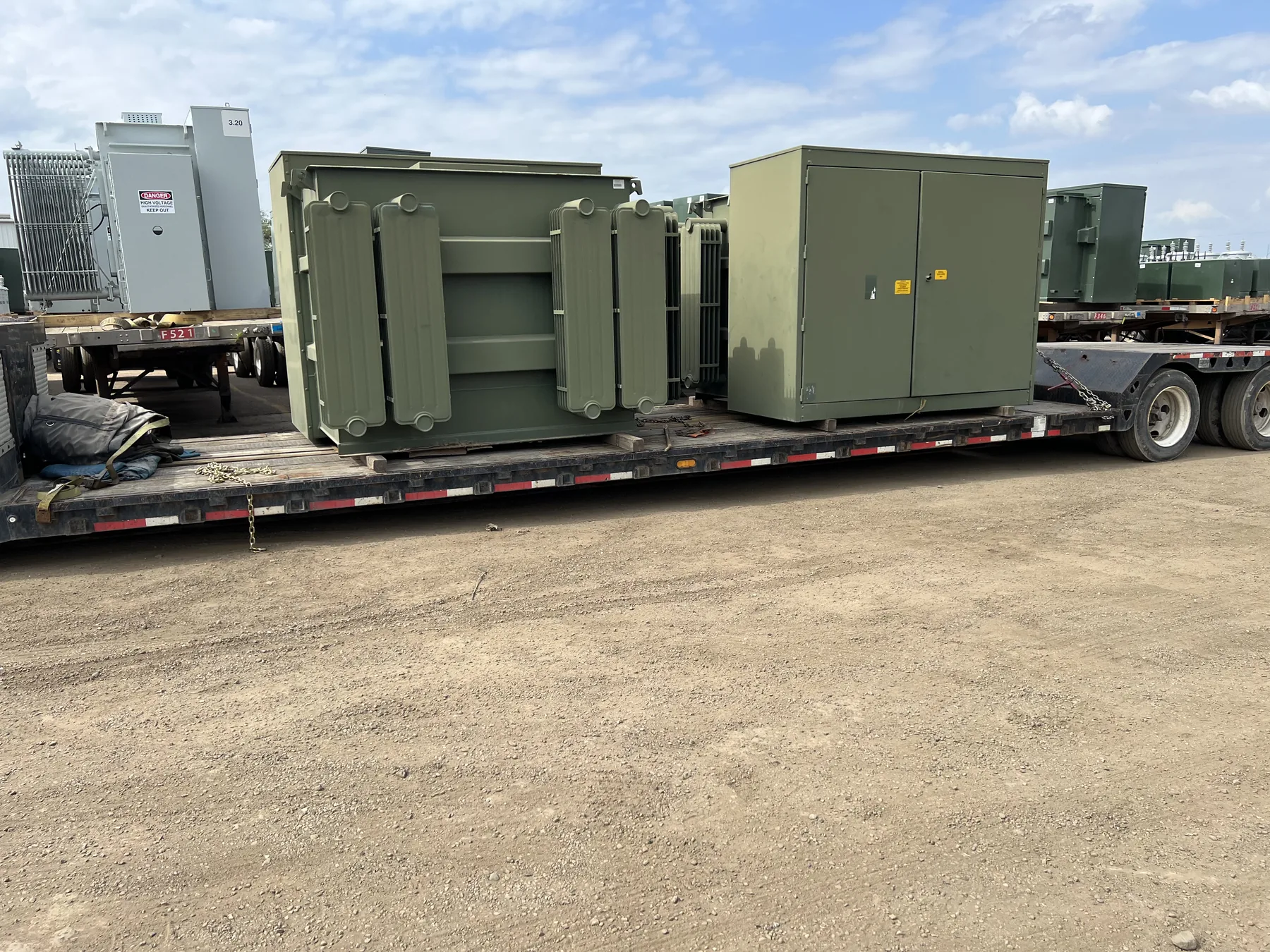
Transformer categories that may fit our buying program
We review commercial and industrial electrical transformers rather than consumer electronics or household equipment. Common submissions include pad-mounted transformers, liquid-filled and dry-type distribution transformers, indoor dry-type units, isolation transformers, step-up and step-down transformers, autotransformers, power transformers, substation transformers, and mixed transformer inventories. Single-phase and three-phase units can both be submitted when the equipment can be identified accurately.
The category is only the starting point. Two transformers with similar cabinets may have different voltage classes, kVA or MVA ratings, winding configurations, cooling systems, accessories, fluid histories, and downstream demand. For that reason, the website never treats the words ‘padmount,’ ‘dry-type,’ or ‘power transformer’ as an automatic purchase promise. The buying team reviews the actual asset and the commercial project surrounding it.
- Pad-mounted, pole-mounted, vault, and other distribution units
- Ventilated, enclosed, cast-coil, isolation, and specialty dry-type units
- Power and substation transformers with technical and transport records
- Single transformers, matching batches, and organized mixed inventories
What usually makes a transformer easier to buy
A strong candidate is clearly identified, lawfully offered by an authorized seller, complete enough for its intended market, and supported by an honest condition history. Readable nameplates, matching serial numbers, full exterior photographs, known ratings, available test or maintenance records, and a practical pickup location reduce the uncertainty in a preliminary review. New-surplus units with documented storage and removed-working units with credible service records are often easier to evaluate than anonymous equipment with no history.
Market fit also matters. Ratings that match current commercial needs, complete accessories, desirable configurations, usable enclosures, and sensible freight economics can support a stronger buying decision. A remote or difficult site does not automatically disqualify an asset, but specialized removal, cranes, permits, long-distance transport, oil work, or restricted access can materially change the total transaction. The buyer considers the equipment and the cost of completing the project together.
New-surplus, used, stored, and non-operational equipment
We may review unused project surplus, distributor or contractor inventory, installed-used transformers, stored spares, retired assets, removed-working equipment, untested equipment, and select non-operational units. Each condition follows a different diligence path. ‘New’ should be supported by purchase and storage history. ‘Removed working’ should identify when and why the transformer was taken out of service. ‘Untested’ should not be presented as operating, and known faults or damage should be disclosed directly.
Non-operational, damaged, drained, incomplete, fire-exposed, flood-exposed, leaking, or heavily corroded equipment may require a narrower review and may not qualify. The buyer may consider reuse, remanufacturing, parts, material recovery, or another approved channel depending on the facts. Sellers should not energize, open, drain, sample, disassemble, or move equipment merely to improve an online submission. Existing records and safe photographs are the correct first step.
The details a transformer buyer needs
The most useful submission begins with manufacturer, model, serial number, production date, kVA or MVA, primary and secondary voltage, phase, frequency, impedance, cooling class, enclosure or mounting style, fluid type when shown, dimensions, and weight. Many of these fields appear on the main nameplate. Photograph the plate straight on, in good light, and at enough resolution to read the smaller characters. Then add complete views of the equipment and close-ups of visible damage or missing parts.
Commercial context is equally important. State the quantity, exact city and state, seller’s authority, reason for sale, operating status, storage history, availability date, pickup deadline, and whether the transformer is installed, disconnected, or staged. Describe the path to the loading point, available crane or forklift capacity, gate and door restrictions, overhead hazards, soft ground, dock access, work-hour limits, and facility safety requirements. Buyers need these facts to evaluate the whole obligation rather than quote an isolated object.
How a buying decision is made
First, the buyer confirms identity and basic eligibility. Second, the ratings and configuration are compared with current demand and potential downstream channels. Third, condition, completeness, records, age, storage, known faults, fluid information, and any required inspection or testing are considered. Fourth, the buyer evaluates location, removal scope, loading, freight, timing, and project risk. Only then can the team decide whether to decline, request more information, propose conditional terms, or prepare an offer.
This process explains why transformer buying cannot be reduced to a generic price-per-pound chart. Weight and recoverable materials may matter in some channels, but they do not capture market demand, reuse potential, certification or testing needs, missing components, transport cost, site labor, documentation, or the risk attached to unknown condition. A responsible buyer identifies the assumptions behind the number and puts important conditions in writing.
Common reasons equipment does not qualify
A transformer may be declined because its identity cannot be confirmed, ownership or sale authority is unclear, the ratings have limited current demand, critical components are missing, the condition is materially worse than represented, records reveal a disqualifying issue, or the equipment falls outside the buyer’s current operating scope. Severe contamination concerns, active leaks, unsafe access, prohibited handling requirements, or an unrealistic pickup deadline can also prevent a transaction.
Economics can be decisive even when the transformer itself is useful. A small unit located far from practical freight, a heavy asset requiring an unusually complex removal, or an incomplete batch that cannot be matched to the inventory may cost more to recover than the available channel supports. A decline is not necessarily a judgment that the transformer has no value anywhere; it means the specific buyer cannot establish a responsible purchase path under the current facts and terms.
What a transformer purchase offer should explain
A useful offer identifies the transformer or inventory, quantity, location, price or pricing basis, payment method and timing, pickup window, loading and freight responsibilities, title transfer, risk of loss, and any conditions tied to inspection, testing, documents, counts, accessories, fluid status, or condition at pickup. It should also explain how material differences are handled. Sellers should compare the total responsibility package, not only the highest headline price.
After written acceptance, both sides confirm contacts, access, safety rules, equipment status, loading readiness, and scheduling. Complex projects may require additional site coordination or qualified contractors. No online form or preliminary conversation authorizes entry, disconnection, rigging, sampling, draining, or transportation. Those activities begin only under the agreed scope and the facility owner’s procedures.
How we review lots, project surplus, and facility inventories
For multiple transformers, create a line-item inventory with a temporary asset number, manufacturer, serial number, core ratings, condition, location, and matching photo filenames. Separate identical units from mixed models and distinguish new-surplus, installed-used, stored, damaged, and unknown-condition groups. A clear spreadsheet prevents photos, quantities, and ratings from being assigned to the wrong unit during review.
Large packages can include different pickup dates, buildings, sites, loading conditions, or project owners. Note those differences at the beginning. The buyer may evaluate the package as a whole, select individual assets, or divide the opportunity into practical phases. Accurate organization helps both sides identify which units fit, which questions remain open, and which logistics costs belong to each part of the transaction.