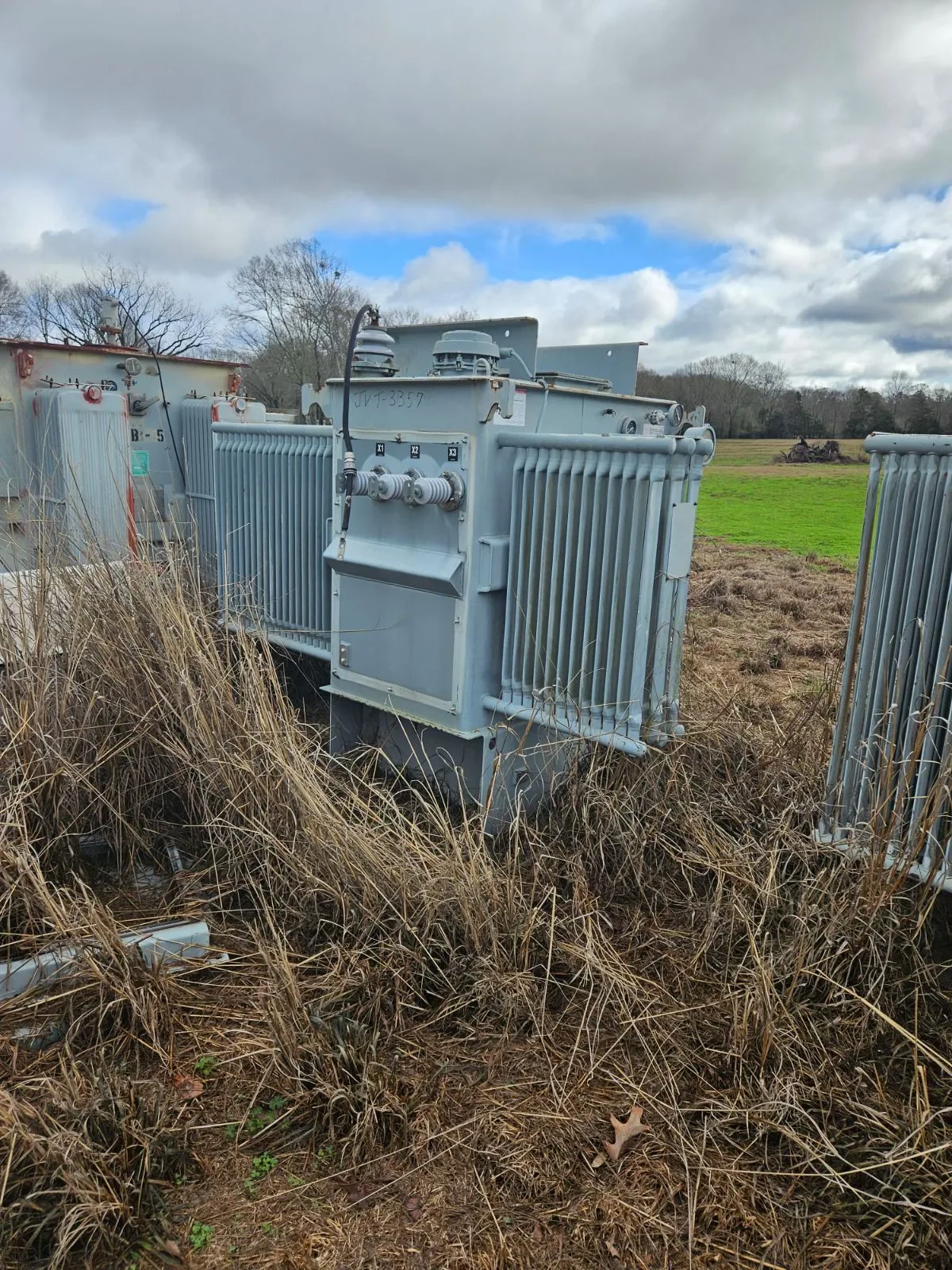
Before you begin
Confirm that you own the equipment or are authorized to discuss its sale. Collect safe-to-obtain photos, the pickup city and state, quantity, and a short condition history. Do not enter energized compartments, remove covers, sample fluid, drain equipment, or move a transformer to complete the request.
If the project includes sensitive facility drawings, customer data, or extensive records, call first to confirm an appropriate exchange method. The public form should not contain protected infrastructure, financial, medical, government, or other sensitive information.
Equipment identity
Choose the closest transformer type and provide manufacturer, model, serial number, year, kVA or MVA, primary and secondary voltage, phase, impedance, cooling class, fluid or dry construction, dimensions, and weight when known. A readable nameplate photo can supply many of these fields.
For multiple units, create a line-item list and match every image to an item number. Do not group different models under one rating or assume all units in a yard are identical.
Condition and documentation
State whether the transformer is new-surplus, installed-used, removed-working, stored, untested, non-operational, damaged, drained, or unknown. Describe leaks, corrosion, missing parts, fire or flood exposure, and known failure history. Attach or summarize available test, maintenance, oil, PCB-related, purchase, and storage records.
Unknown information is acceptable when clearly identified. An accurate unknown is more useful than an unsupported claim that may later change the offer.
Location and pickup context
Provide the exact city and state and explain whether the equipment is installed or staged. Identify de-energization and disconnection status, verified weight and dimensions, available loading equipment, dock or ground access, gates, curbs, overhead restrictions, soft ground, work hours, and deadlines.
The buyer will use this information to decide whether pickup can be coordinated and what responsibilities must appear in the proposal. A request does not authorize entry or field work.
What your request means
Submitting the information starts a commercial review. It does not guarantee eligibility, a particular price, purchase, freight, removal, or response time. The team may request additional facts, decline equipment outside the current scope, or discuss an offer and pickup plan when there is a fit.
Any final transaction should use written terms that identify the equipment, price, payment, location, loading and freight responsibilities, timing, and contingencies. Review those terms before accepting.