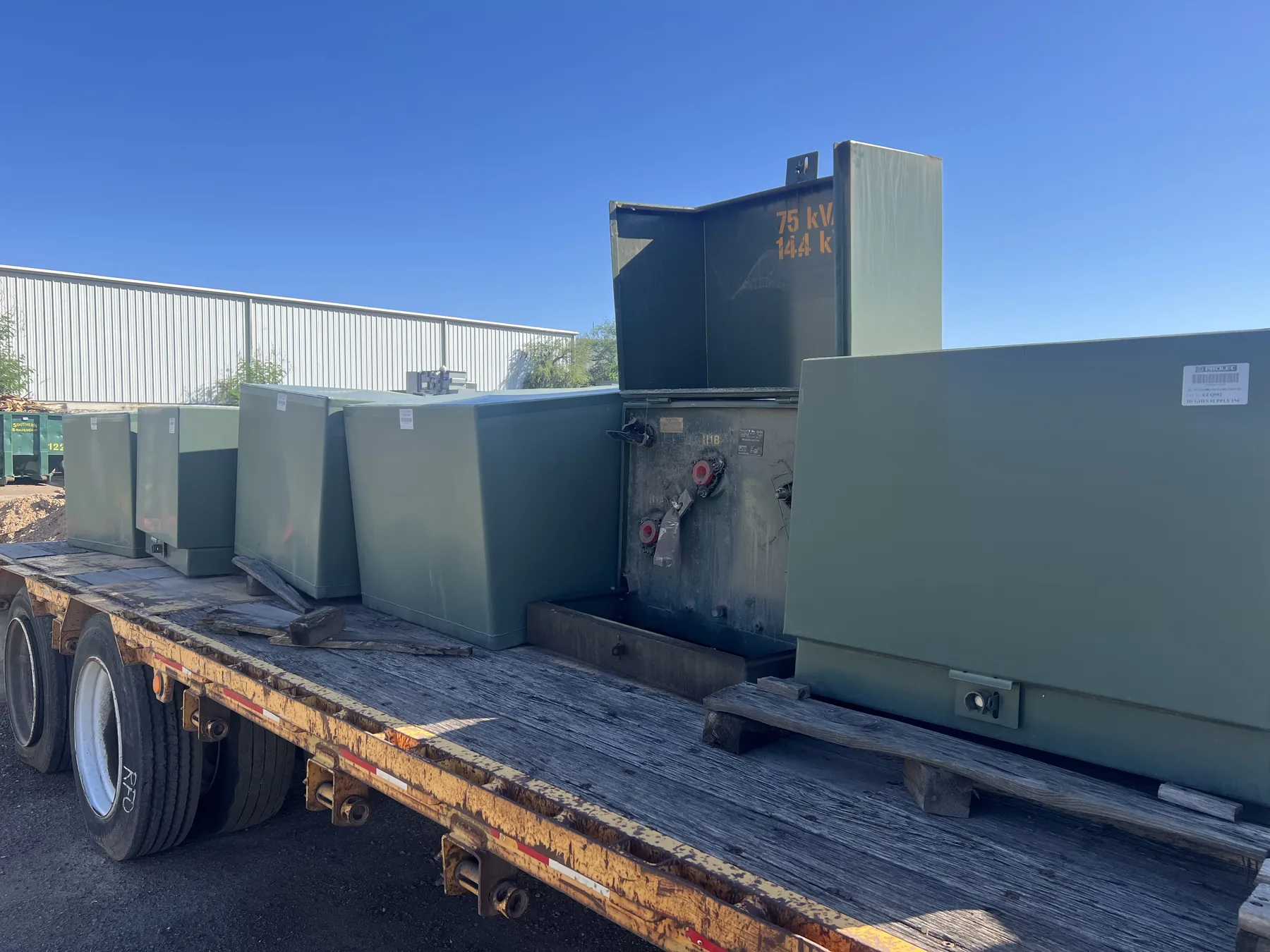
Confirm ownership, authority, and site safety
Before marketing equipment, confirm who owns it and who is authorized to approve a sale and site access. Identify liens, project closeout requirements, utility interests, lease obligations, and internal approvals where applicable. A buyer may request documentation that supports the seller’s authority.
Confirm whether the transformer is energized, connected, drained, open, staged, or stored. Do not approach restricted areas or perform electrical, rigging, sampling, draining, or lifting work for a quote. The owner’s safety program and qualified personnel control those tasks.
Create the asset record
Photograph the complete transformer, nameplate, accessories, visible condition, and pickup route. Record manufacturer, model, serial number, date, ratings, phase, impedance, cooling, fluid when documented, dimensions, weight, quantity, operating history, and condition. For multiple units, assign an item number to every transformer.
Collect drawings, test reports, maintenance records, purchase documents, oil or PCB-related records, and failure reports when available. Clearly mark unknown fields. A buyer needs a reliable description more than optimistic adjectives.
Request a qualified commercial review
Send the asset record and explain the reason for sale, deadline, location, and site access. A buyer should determine whether the equipment fits the current buying scope and ask targeted follow-up questions. Be cautious with any instant price that is offered without enough information to identify the transformer or the work required.
For sensitive or large projects, ask how records should be exchanged and who will handle the review. The initial response may be a request for information rather than an offer, especially when a large transformer, installed equipment, or uncertain fluid status is involved.
Compare written terms
Compare the equipment description, quantity, price, payment method and timing, inspection contingencies, title transfer, access, disconnection, rigging, loading, freight, permits, oil or environmental scope, schedule, and change conditions. A single price number does not show the seller’s total obligation.
Confirm what happens if count, ratings, condition, or documentation differs. Ask who bears cancellation or delay costs if site access is not ready. Written clarity protects both sides and helps operations teams plan the work.
Prepare the site and pickup
Only after the agreement is accepted should the responsible parties finalize de-energization, disconnection, access, staging, lift plans, transport equipment, permits, environmental controls, and schedule. Share site rules, contacts, hours, personal protective equipment requirements, and emergency procedures with the approved crew.
Inspect the pickup route and equipment condition before work begins. Record the units and accessories being transferred. Do not substitute or add equipment without updating the agreement.
Close the transaction and retain records
Confirm pickup, bill of lading or receipt, quantities, serial numbers where applicable, payment completion, and any required transfer or disposal records. Keep the agreement, communications, photos, and documents according to the organization’s retention policy.
If the commercial terms included inspection or testing after receipt, track the outcome and any adjustment under the agreed process. A clear closeout creates a reusable template for the next surplus project and supports accountable asset management.