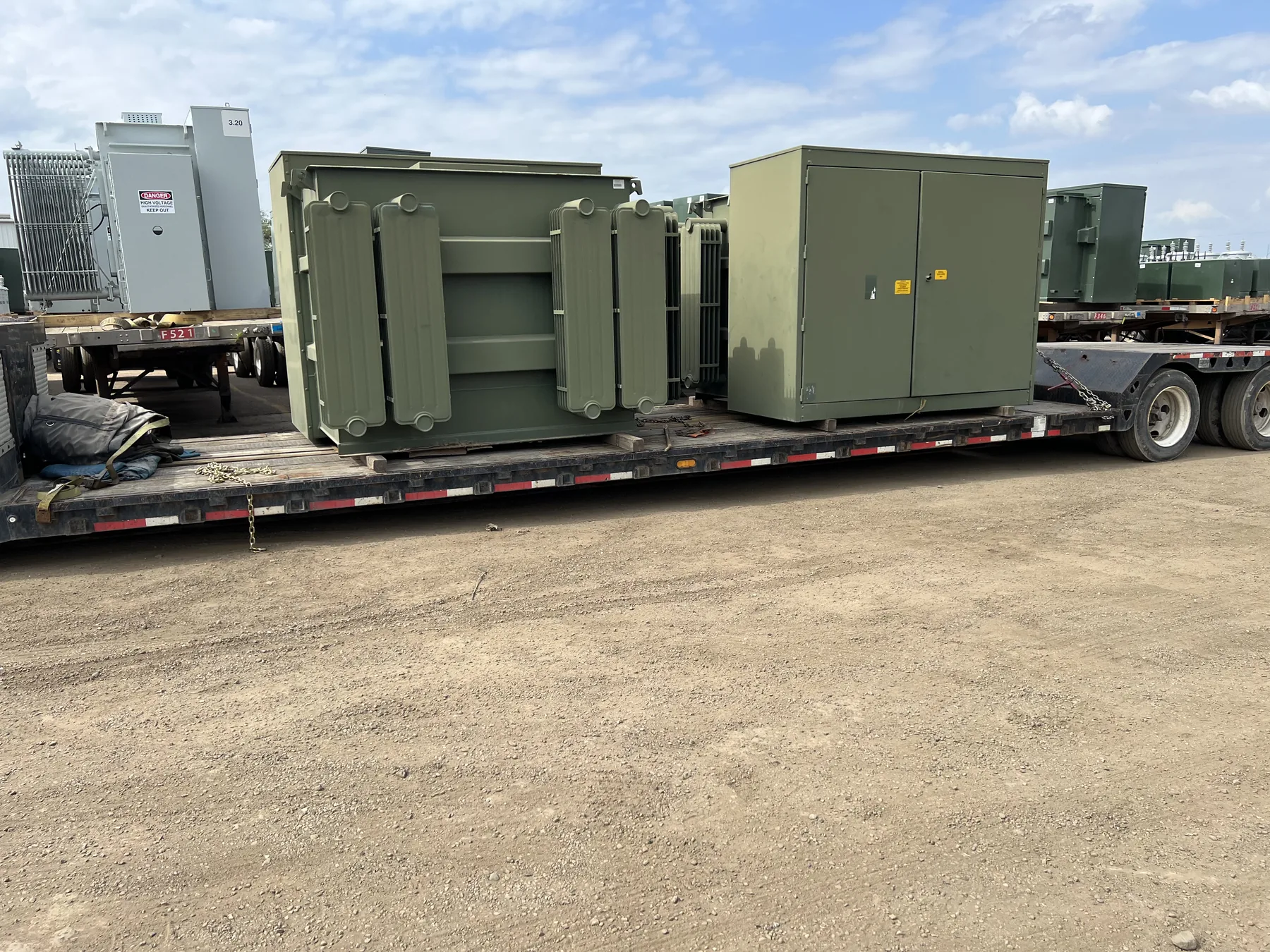
Type changes the evaluation
Transformer categories describe construction, installation, cooling, electrical function, or application. A pad-mounted distribution transformer, a ventilated dry-type unit, and a large oil-filled substation transformer can all change voltage, but they present very different transportation, condition, documentation, and market questions. Identifying the category keeps the first review focused and helps route the submission to the right buyer.
Sellers do not need to become transformer engineers before contacting us. A clear nameplate photograph and complete exterior views are usually more reliable than a guess. If the category is uncertain, choose “unknown” in the offer form and describe where the unit was installed, whether it is indoors or outdoors, whether it contains liquid, and how it is currently stored.
Pad-mounted transformers
Pad-mounted transformers are enclosed units typically installed at ground level on a concrete pad. Commercial submissions may come from utility projects, facilities, developments, renewable-energy sites, contractors, distributors, or canceled construction. Important review details include single- or three-phase configuration, kVA, primary and secondary voltage, loop- or radial-feed configuration when known, fluid status, cabinet condition, keys or access, and whether the unit is disconnected and movable.
Photos should show the whole cabinet, nameplate, doors, bushings or compartments only when already open and safe, radiators, gauges, and any dents, corrosion, leaks, missing parts, or modifications. Never enter a live compartment or defeat a lock for a quote request. Visit the dedicated padmount page for a detailed seller checklist.
Distribution transformers
Distribution transformers serve the final voltage-transformation stages used by facilities, utilities, campuses, and projects. The broad category can include pad-mounted, pole-mounted, vault, and other configurations. Because the term covers many designs, the nameplate and installation context matter more than the label alone. Quantity can also be important when a seller has a standardized batch from a project or warehouse.
For a useful review, identify phase, kVA, voltage, fluid or dry construction, mounting style, year, condition, and location. Note whether bushings, cabinets, covers, gauges, and accessories are complete. Do not claim a unit is ready for service unless qualified testing and records support that statement.
Dry-type and isolation transformers
Dry-type transformers use air and solid insulation rather than liquid for cooling and insulation. They may be open ventilated, enclosed, cast-coil, or specialty designs. Common seller questions concern whether an older indoor unit has reuse value, how to document windings without unsafe disassembly, and whether several small units should be submitted together.
Send the enclosure, nameplate, terminals only when safely visible, ventilation openings, and signs of overheating, moisture, contamination, or physical damage. Include whether the unit was operating when removed and whether it has been stored indoors. Isolation, drive, control, autotransformer, and step-up or step-down functions should be noted when the nameplate or records identify them.
Power and substation transformers
Larger power transformers often require a more detailed technical and logistics review. Rating, voltage class, cooling class, fluid quantity, accessories, tap changer information, test history, foundation and access conditions, transport dimensions, weight, and regulatory records can materially affect the project. The commercial discussion may involve more stakeholders and a longer planning window than a warehouse pickup.
Do not begin dismantling, draining, sampling, or moving a large transformer solely to obtain an online quote. Start with existing records and safe photographs. If the unit may be a fit, qualified parties can define what additional inspection, sampling, engineering, rigging, or environmental review is appropriate.
Step-up, step-down, three-phase, and autotransformers
Terms such as step-up and step-down describe how a transformer changes voltage in a particular application. Three-phase describes the electrical system, while autotransformer describes a winding relationship. These descriptors are useful but usually do not provide enough information for a purchase evaluation. A complete nameplate can reveal the ratings and configuration that make the unit commercially identifiable.
If multiple labels appear on the equipment, photograph all of them. Include accessory plates, tap-changer information, wiring diagrams, and shipping data when they are already accessible. The buyer can then distinguish the main rating information from installation or component labels and ask targeted follow-up questions.