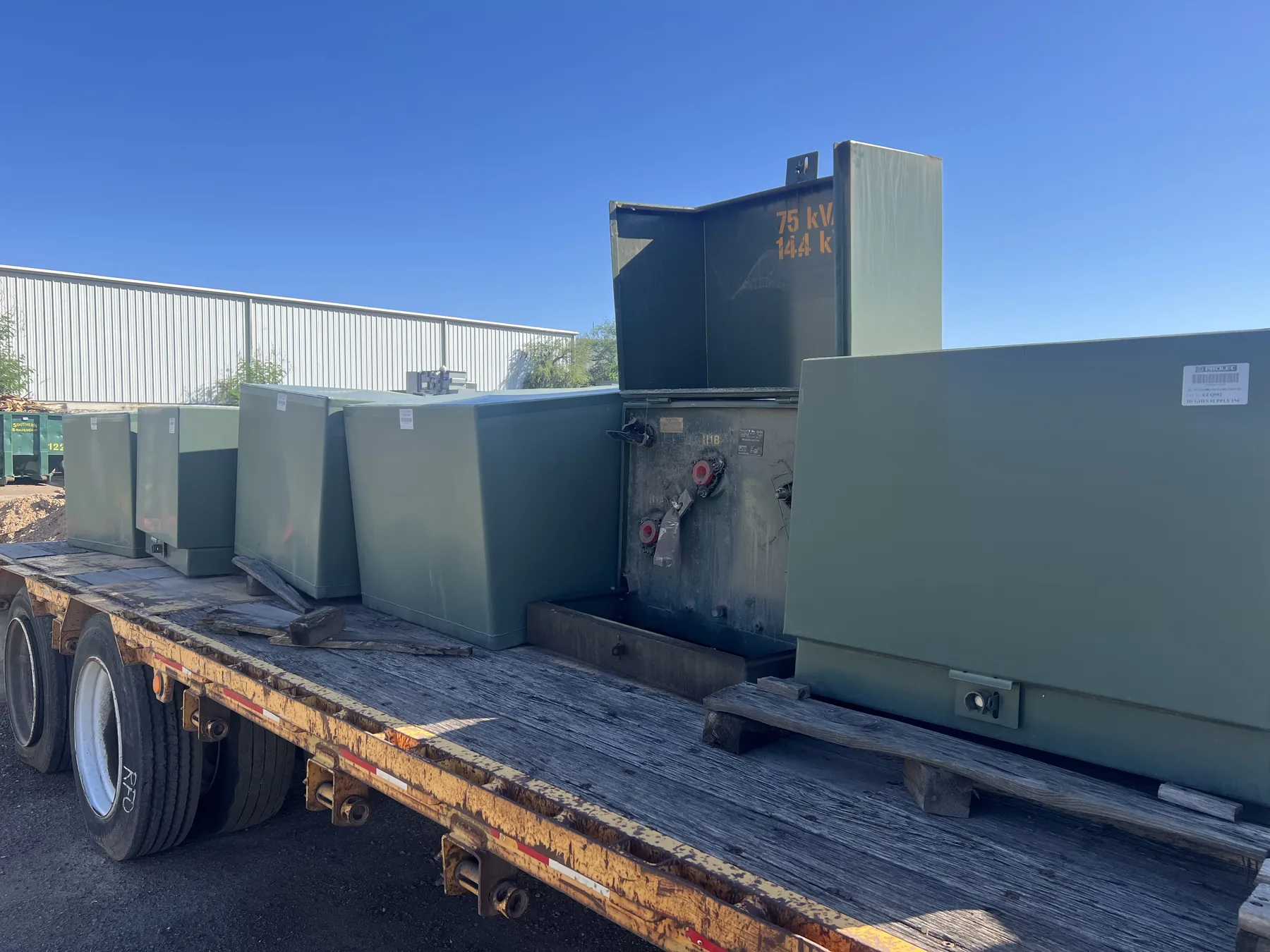
Define the pickup scope in writing
The parties should identify whether the transformer is already de-energized, disconnected, drained, dismantled, staged, blocked, palletized, or ready to load. The agreement should assign electrical work, rigging, cranes or forklifts, loading, blocking and securement, freight, permits, escorts, oil or environmental work, and restoration.
A statement such as “pickup included” is incomplete unless it defines what pickup begins with. Site conditions and responsibilities can materially affect price, schedule, and risk.
Document the route from equipment to transport
Show the transformer’s position and every constraint between it and the truck: electrical rooms, doors, corners, elevators, ramps, steps, curbs, bollards, fences, gates, trenches, soft ground, overhead lines, structures, active equipment, traffic, and turning areas. Provide dimensions and verified weight from the plate, drawings, or shipping records when available.
State whether a loading dock, crane pad, forklift, gantry, skates, rollers, jacking points, or other equipment is available. Do not promise equipment capacity unless the owner has verified it.
Site control and qualified work are non-negotiable
The facility controls lockout/tagout, energized-work boundaries, contractor orientation, personal protective equipment, work hours, traffic, and emergency procedures. Electrical disconnection and heavy rigging require qualified parties. A purchaser’s interest in the asset does not override the owner’s safety program.
Never drain oil, remove bushings, open tanks, or dismantle a transformer solely to make pickup appear easier. Those actions can create safety, environmental, moisture, contamination, and resale issues. They should occur only under an approved scope.
Transport planning depends on size and configuration
Smaller dry-type units may move on pallets or conventional equipment when weights and dimensions permit. Padmount and distribution transformers may require forklifts, cranes, rollback equipment, or flatbeds. Large power transformers may require accessory removal, oil planning, heavy-haul trailers, route studies, permits, escorts, and engineered lift or transport plans.
The carrier needs accurate dimensions, weight, center-of-gravity considerations, fluid status, securement points, pickup and delivery access, and schedule. Incorrect information can cause delays or an unsafe mismatch between the load and equipment.
Keep chain-of-custody and transfer records organized
Match the bill of lading, inventory list, serial numbers, photos, and agreement. Record accessories and separate components included in the sale. If environmental, sampling, recycling, or disposal documentation is part of the agreed scope, identify the responsible provider and required closeout records.
Do not assume that a standard freight receipt satisfies every asset, environmental, or accounting requirement. The seller’s internal policies and applicable rules determine what must be retained.
Build a schedule around real dependencies
Pickup dates can depend on outage work, replacement commissioning, permits, utility coordination, contractor availability, site access, weather, and carrier scheduling. Share fixed deadlines early, but distinguish a preferred date from a hard contractual milestone.
A good plan includes contacts, arrival instructions, equipment readiness, a contingency for access or count differences, and a communication path if the work cannot proceed. Confirm readiness before dispatch to avoid preventable mobilization costs.