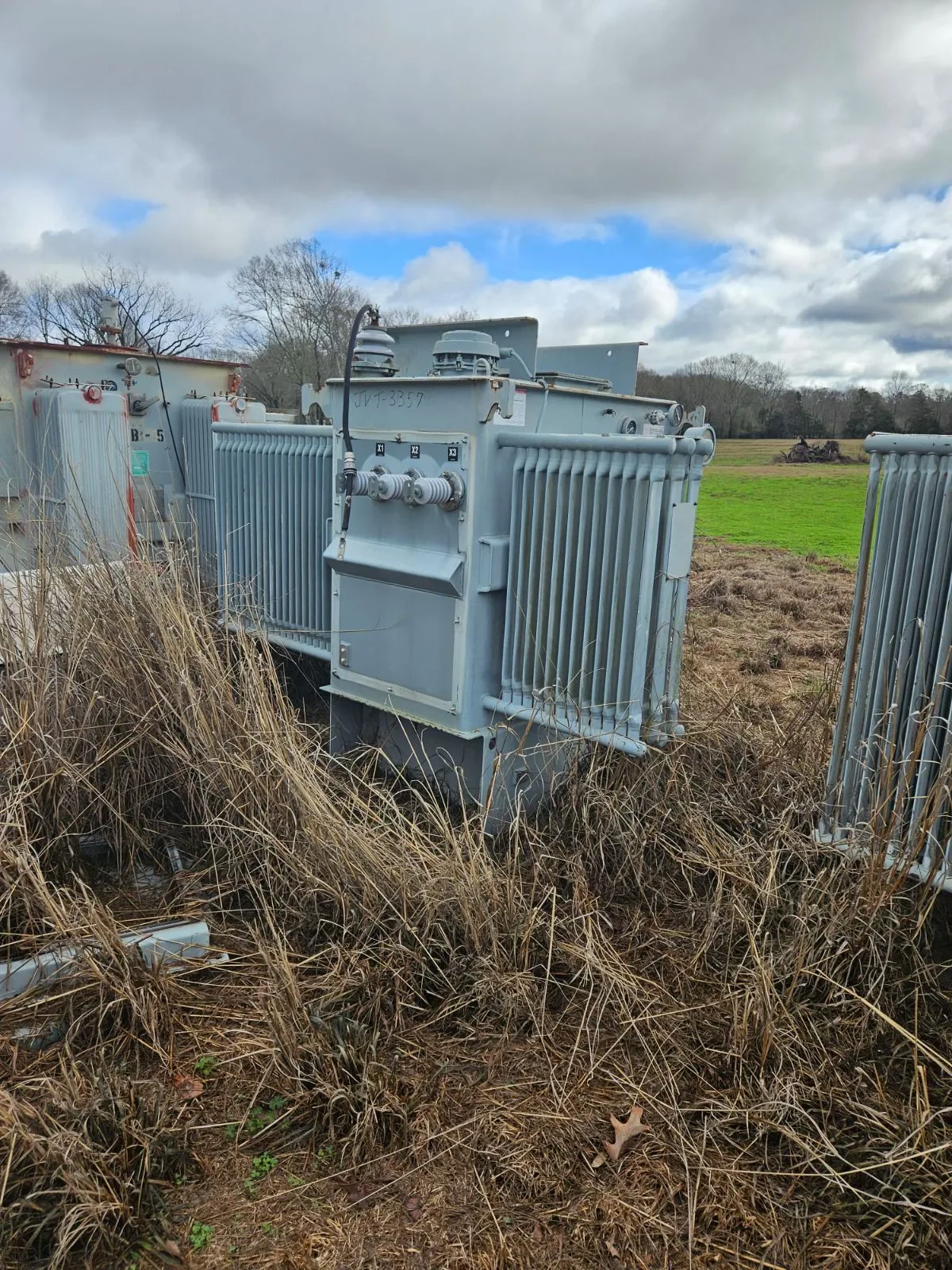
Safety comes before a better photograph
Do not open energized compartments, remove guards, climb equipment, cross barriers, reach near conductors, or move a transformer to photograph it. Use existing safe access and follow the facility owner’s electrical-safety program. If the nameplate is not safely visible, send what can be obtained and explain the limitation.
A buyer can request a qualified follow-up if the unit appears commercially relevant. An incomplete but safely collected packet is better than a dangerous attempt to expose terminals, fluid, windings, or internal components.
Capture one context image and two plate images
Start with a full view showing where the plate sits on the transformer. Then photograph the entire plate straight on, with enough light to avoid glare. Add closer images of the upper and lower sections if small text is unreadable. Keep the camera parallel to the plate and clean only with an approved dry method that does not disturb equipment or labels.
Review the images before leaving the safe area. Zoom in on the serial number, kVA or MVA, voltages, phase, impedance, weight, date, and fluid fields. If they cannot be read on the phone, retake the image from a stable position rather than relying on digital sharpening later.
Key fields help establish the transformer’s identity
Manufacturer, model, serial number, and date identify the specific unit and may connect it to records. The kVA or MVA rating describes capacity. Primary and secondary voltage indicate the electrical transformation. Phase and frequency describe the system. Impedance, vector or connection information, temperature rise, insulation class, cooling class, taps, enclosure, fluid, dimensions, and weight may also appear.
Not every nameplate uses the same layout or terminology. Do not guess at an abbreviation. Send the readable image and any drawings or records. A qualified reviewer can interpret which fields matter for the specific transformer type.
Add condition and logistics photos
After the plate, photograph all sides of the unit, cabinet or tank, radiators, bushings, gauges, fans, pumps, valves, doors, terminal areas only when safely exposed, and visible damage. For a dry-type unit, show the enclosure and any already-open safe views. For a padmount, show cabinet condition and the surrounding pad.
Add the route to the loading point: doors, aisles, corners, gates, curbs, overhead restrictions, dock, ground conditions, crane or forklift access, and nearby equipment. These images help the buyer understand costs and responsibilities that a nameplate cannot show.
Match every photo to the correct asset
For multiple transformers, assign an item number such as T-01, T-02, and T-03. Put that identifier in the file names and inventory sheet. Record quantity, location, condition, and ratings beside the same identifier. A paper card placed near—not over—the plate can help organize the set if site rules allow it.
Avoid sending a folder of unlabeled images. If a buyer cannot determine which plate belongs to which cabinet, the review slows down and may produce incorrect assumptions. Simple organization is one of the easiest ways to improve a surplus package.
Send facts and mark unknowns
Use the offer form to enter the fields you can read and choose unknown where appropriate. Include service and storage history, test records, oil or PCB-related documents, ownership, and access notes when available. Never invent a value to satisfy a required field; the form is designed to accept uncertainty.
The purpose of the nameplate packet is qualification, not a final engineering or environmental determination. The buyer may still need to confirm condition, documents, or logistics before making or finalizing an offer.