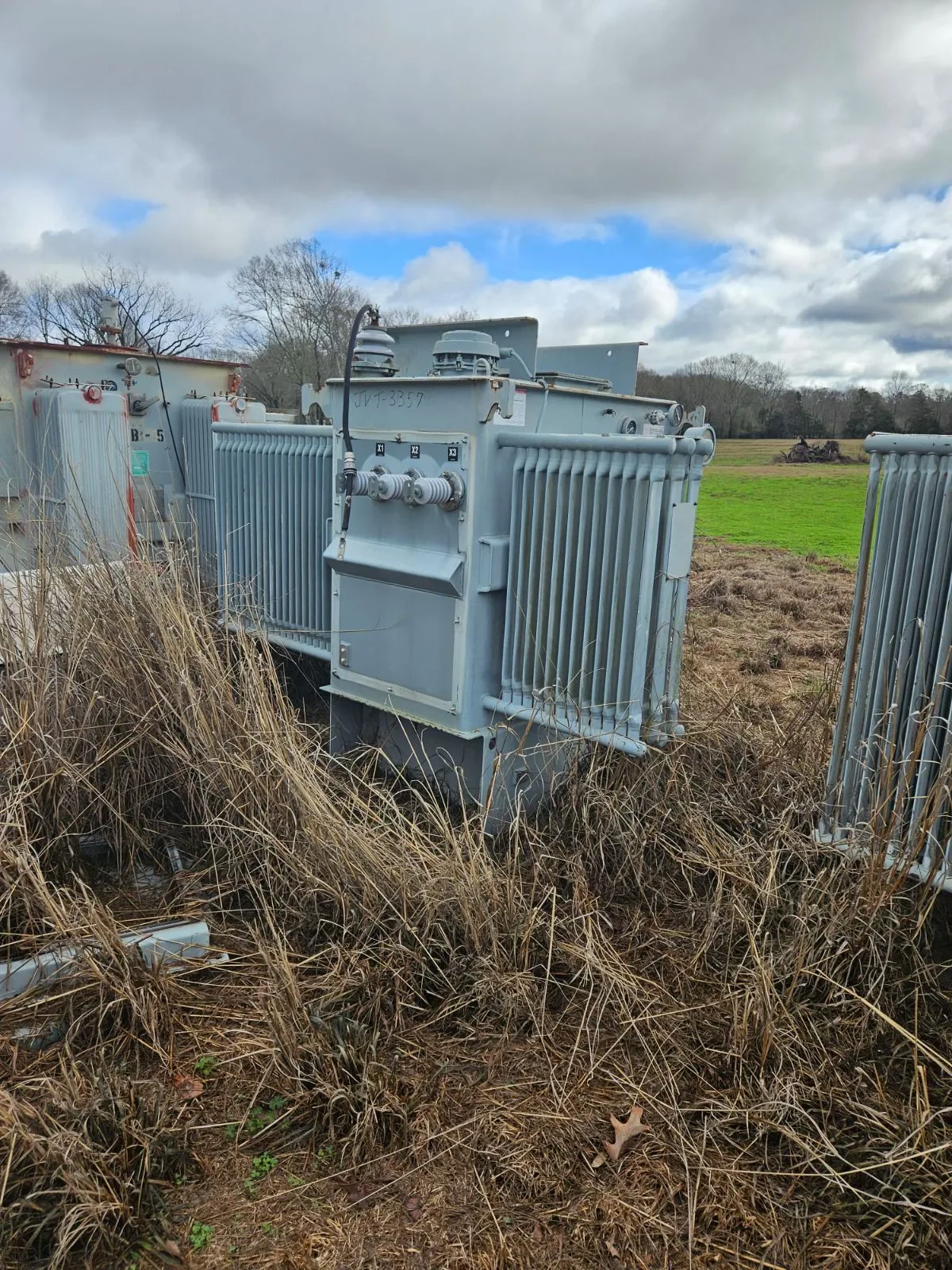
Why there is no responsible instant-value calculator
Transformers are not interchangeable commodities. Two similarly sized units may differ in kVA or MVA, voltage, phase, windings, impedance, age, fluid, configuration, condition, records, and market demand. The cost to remove and transport them may also differ by thousands of dollars. A calculator that ignores those factors can create false expectations.
A preliminary commercial review uses the best available asset information to determine whether the unit has a likely reuse, refurbishment, parts, material-recovery, or other approved path. The offer reflects the expected path and the obligations required to complete the transaction.
Specifications establish possible market fit
Manufacturer, model, serial number, kVA or MVA, primary and secondary voltage, phase, impedance, cooling class, enclosure, taps, fluid, dimensions, and weight help identify what the transformer is. Common, currently useful configurations may attract different interest than specialized or obsolete units, but no rating alone guarantees demand.
A clear nameplate and supporting drawings reduce identification uncertainty. If ratings are missing, the buyer may need additional records or may be unable to evaluate the unit as reusable equipment.
Condition and records change the risk
New-surplus status, operating history, testing, maintenance, storage, completeness, physical damage, leaks, contamination, fire or flood exposure, and known failures can affect the expected cost and outcome. Describe facts accurately and provide reports when available. A buyer may distinguish between an initial price and a price contingent on inspection or testing.
Unknown history is not the same as failed condition, but it carries uncertainty. Honest disclosure gives the buyer a chance to structure the next step instead of discovering a material difference after freight or labor has been committed.
Location and handling can materially affect net value
A unit at a loading dock with verified weight and equipment available may be simpler to collect than an installed transformer requiring outage coordination, disconnection, oil work, rigging, a crane, permits, and a specialized trailer. Distance and route restrictions can also affect the economics.
Provide loading access, site hours, gate widths, overhead clearances, floor or ground conditions, dock details, available lifting equipment, and deadlines. The written offer should state which party absorbs each cost rather than hiding it behind a vague “free pickup” promise.
Compare the full offer, not only the headline price
A higher number can be less valuable if it shifts expensive removal, loading, transport, testing, or disposal obligations to the seller. Compare payment timing, contingencies, quantity verification, equipment description, freight terms, site responsibilities, title transfer, and exception handling.
Ask whether the offer is firm based on the supplied information or subject to later review. Neither structure is automatically wrong, but the conditions should be clear. A professional buyer should be willing to explain what could change and why.
Improve valuation quality with better evidence
Send readable nameplates, complete photos, accurate counts, condition disclosure, available records, and the pickup context. For a large inventory, organize the units in a spreadsheet and match every photo to an item number. For installed power equipment, provide site and schedule details early.
The goal is not to make the transformer look better than it is. The goal is to reduce unknowns. Better information supports a faster qualification decision and a more defensible commercial proposal.