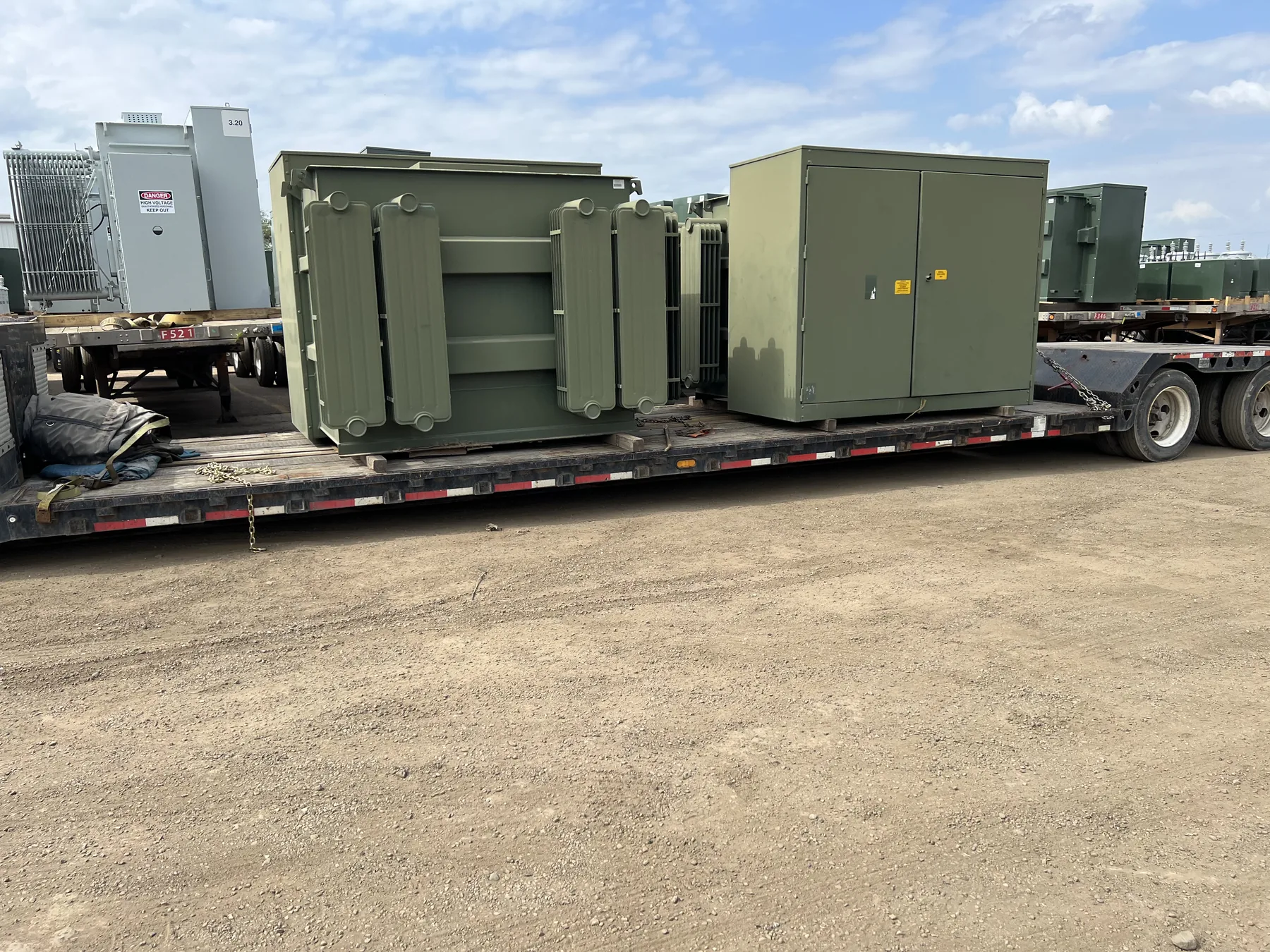
A transformer sale in Houston starts with the site and the equipment
Houston’s industrial economy creates transformer surplus for many different reasons. A petrochemical or manufacturing facility may replace equipment during a planned outage. A commercial property may modernize its electrical service. A data facility, contractor, distributor, utility supplier, project developer, or liquidation team may be holding a spare that no longer matches the project. These are different situations, and the right sale process begins by identifying why the unit is available, who is authorized to sell it, and whether it is installed, disconnected, staged, or stored.
We review commercial transformer opportunities from Houston and the surrounding Gulf Coast region without pretending that every transformer has the same market. Sellers around the Ship Channel, Pasadena, Deer Park, Baytown, Channelview, Katy, Sugar Land, Pearland, The Woodlands, and other nearby areas can submit equipment for review. The exact address matters because access, security, crane availability, freight routing, weather exposure, and removal scope can affect the transaction as much as the nameplate rating.
Electrical transformers Houston organizations may have available
Houston submissions can include pad-mounted distribution transformers from commercial developments, dry-type units from buildings and plants, isolation or step-up and step-down transformers from process equipment, and larger power or substation transformers from industrial and utility-related sites. We also review new-surplus project equipment, stored spares, contractor closeout inventory, decommissioned assets, and organized groups of mixed units. A broad category name does not determine eligibility; the electrical configuration, condition, documentation, and current market fit do.
For each transformer, provide the manufacturer, serial number, production date when shown, kVA or MVA, primary and secondary voltage, phase, frequency, impedance, cooling class, enclosure or cabinet type, fluid information, dimensions, and weight. Photograph the complete unit before sending close-ups. For pad-mounted equipment, show the cabinet, doors, compartments, bushings when safely visible, and signs of impact or corrosion. For dry-type equipment, show the enclosure, coils only when already safely accessible, ventilation condition, and any missing panels or components.
- Pad-mounted and distribution transformers
- Dry-type, isolation, step-up, and step-down units
- Power and substation transformers
- New-surplus spares, project overages, and organized multi-unit lots
Document Gulf Coast storage, storm, and corrosion exposure
Houston’s heat, humidity, heavy rain, coastal air, and storm history make condition documentation especially important. State whether the transformer was installed indoors, installed outdoors, stored under cover, or left exposed. Photograph rust, coating failure, cabinet damage, radiator condition, gauges, valves, bushings, labels, evidence of leaks, and the base or skids. If a unit was near floodwater, wind-driven debris, a roof failure, or another site incident, disclose what is known and provide records rather than cleaning away evidence before review.
Do not energize, open, sample, drain, tip, or move a transformer merely to obtain an offer. Oil-filled equipment may require existing fluid records, test reports, PCB-related documentation, maintenance history, or a written statement describing what is and is not known. Dry-type equipment may need photographs showing dust, moisture, heat damage, coil condition, and storage protection. Honest condition reporting does not automatically disqualify a unit; it allows the buyer to determine whether resale, reuse, remanufacturing, parts recovery, or another compliant channel is realistic.
Build a Houston equipment packet that can be priced
A useful submission connects every photograph and document to a specific asset. For one transformer, send a nameplate image, front and side views, visible accessories, condition details, exact location, and current status. For a group, assign an item number to each unit and use the same number in the photo filenames and inventory spreadsheet. Separate new-surplus, used-operational, untested, damaged, incomplete, and scrap-only material instead of describing the entire lot with one condition label.
Include the seller’s desired schedule and the reason for removal. Tell us whether the unit is part of an active project, a planned shutdown, an insurance or recovery process, a warehouse clearance, or a facility sale. Identify any deadline imposed by a lease, construction sequence, outage window, or property transfer. A deadline does not guarantee a faster purchase, but knowing it early helps determine whether inspection, documentation, commercial approval, rigging, and transportation can be completed responsibly.
- Readable nameplate plus full exterior photographs
- Exact Houston-area address and authorized site contact
- Installed, disconnected, drained, staged, or stored status
- Verified dimensions, weight, quantity, records, and target removal date
Plan for Houston site access before promising pickup
A transformer beside an open warehouse dock is different from one inside a secured process plant, behind active switchgear, on a roof, in a vault, or within a congested commercial property. Houston-area sites may have controlled gates, escorts, contractor onboarding, safety orientations, restricted work hours, hot-work rules, refinery or port-area security, and limited staging. Share those requirements during review so the proposed pickup plan reflects the actual site instead of assuming unrestricted access.
Provide photographs or a simple route sketch from the transformer to the loading point. Show doors, turns, trenches, pipe racks, bollards, curbs, overhead lines, soft ground, drainage areas, dock conditions, pavement limits, and the space available for a crane, forklift, rollback, or tractor-trailer. Houston traffic windows and heavy-haul routing may also influence scheduling. The buyer must know where a carrier can legally and safely enter, turn, stage, load, and leave before freight is described as included.
Define shutdown, rigging, fluid, and loading responsibilities
Installed transformers remain under the facility owner’s electrical-safety program. The seller should identify who will de-energize, verify isolation, disconnect conductors, remove grounding, release anchors, and make the unit ready for movement. Qualified site personnel or approved contractors must perform that work. A commercial purchase inquiry is not authorization to interrupt service, enter an electrical room, open a cabinet, or begin dismantling equipment.
The written transaction should separately assign rigging, cranes or forklifts, skates, cribbing, fluid handling, environmental work, permits, loading, blocking, securement, freight, and restoration. If the transformer is leaking or associated with a release, the owner’s emergency and environmental procedures take priority over a sale. If a scheduled outage controls access, provide the available work window and site requirements before an offer is accepted so mobilization is not based on an impossible schedule.
How we evaluate an offer for a Houston transformer
The commercial review considers the transformer’s ratings, manufacturer, age, configuration, condition, completeness, documentation, quantity, current demand, and potential disposition path. Houston logistics enter the calculation through site access, rigging scope, mobilization, route constraints, and freight distance. Several compatible units staged together may support a different outcome than one difficult-to-remove unit, but quantity alone does not guarantee value.
Compare the complete written proposal, not only the headline price. Confirm payment timing, inspection or documentation contingencies, count and condition assumptions, who owns the equipment, when title transfers, what pickup work is included, and what happens if the actual unit differs from the submitted information. A credible buyer should be willing to state those responsibilities clearly. We do not promise that every Houston transformer will receive an offer or that weight alone determines its worth.
Request a transformer review from the Houston area
Start with the offer-request page and upload or describe the best information already available. Include “Houston, Texas” and the actual suburb or site location, because a general metro label is not enough for access and transportation planning. If the project includes many units, send a representative photo set and explain that an inventory list is available. We can then identify which fields and supporting records are needed for a useful review.
Call or text (951) 403-5738 when the schedule or site situation is easier to explain by phone, then follow with the nameplates, photographs, inventory, and access notes. A submission begins an evaluation; it does not create an automatic purchase, price, pickup date, or obligation. Accurate Houston-specific information gives both parties the best chance to determine quickly whether the equipment and logistics fit a responsible transaction.